


Understanding Fuel Octane Ratings and Choosing the Right One for Your Motorcycle

Updated: May 14
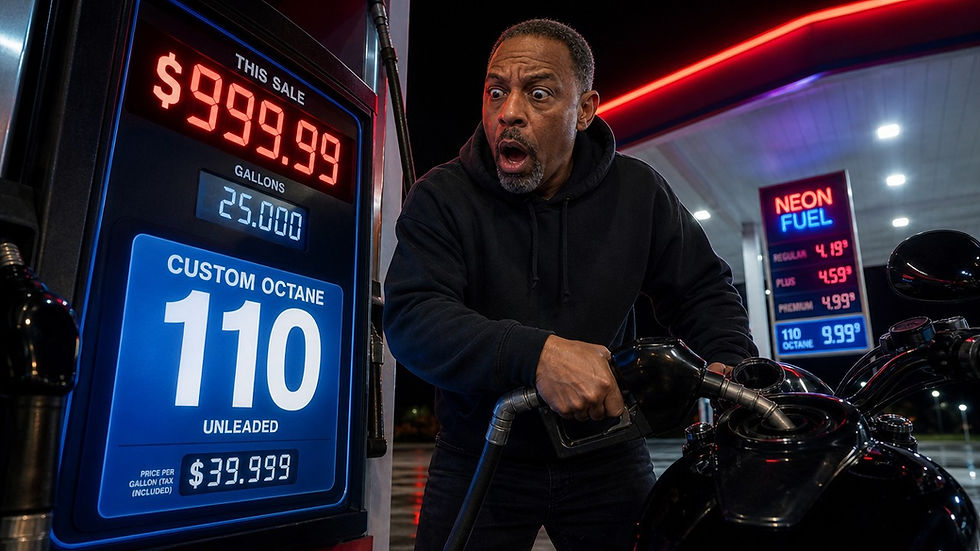
If you’re passionate about motorcycles and want to become a smarter, safer, and more confident rider, then don’t miss out. Subscribe today at New Motorcycle Riders and be the first to receive future articles, riding tips, training advice, product reviews, and real-world motorcycle content designed to help riders of all experience levels improve their riding experience. Whether you’re new to riding or a seasoned motorcyclist, there’s always something new to learn on the road ahead.
Choosing the right fuel for your motorcycle can feel confusing, especially when you see numbers like 87, 89, or 91 on the pump. These numbers represent the fuel’s octane rating, a key factor that affects your bike’s performance and engine health. Knowing what octane rating means and how to pick the right one can save you money, improve your ride, and protect your engine from damage.
What Is Fuel Octane Rating?
Fuel octane rating measures a gasoline’s ability to resist “knocking” or “pinging” during combustion. Knocking happens when the air-fuel mixture in the engine cylinder ignites prematurely, causing uneven pressure and vibrations. This can reduce engine efficiency and, over time, cause damage.
The octane number is a scale based on two reference fuels: iso-octane, which resists knocking well and is rated 100, and heptane, which knocks easily and is rated 0. A higher octane rating means the fuel can withstand more compression before igniting. For example:
87 octane is regular unleaded fuel, suitable for most everyday engines.
91 or 93 octane is premium fuel, designed for high-performance engines that compress the air-fuel mixture more.
Motorcycle engines vary widely in design and compression ratios, so the octane rating you need depends on your bike’s specifications.
Why Octane Rating Matters for Motorcycles
Motorcycles often have higher compression ratios than cars, especially sport and performance models. Higher compression means the engine squeezes the air-fuel mix more before ignition, which can improve power and efficiency. But it also increases the risk of knocking if the fuel’s octane rating is too low.
Using the wrong octane fuel can lead to:
Engine knocking or pinging, which feels like a metallic rattle.
Reduced power and acceleration because the engine timing adjusts to avoid knocking.
Long-term engine damage if knocking persists.
Lower fuel efficiency, costing you more at the pump.
On the other hand, using a higher octane fuel than your engine requires usually does not improve performance or fuel economy. It just means you pay more for fuel without added benefits.
How to Find the Right Octane Rating for Your Motorcycle
The best way to know which octane rating to use is to check your motorcycle’s owner manual. Manufacturers specify the minimum octane rating needed for safe and efficient operation. Here are some tips:
Follow the manual’s recommendation. If it says 87 octane, don’t use 91 unless you want to spend extra money without gains.
If the manual recommends premium fuel (91 or higher), use it. Using lower octane can cause knocking and damage.
If you experience knocking on the recommended octane, try a higher rating. Sometimes fuel quality varies by location.
Consider your riding style. Aggressive riding or heavy loads may benefit from higher octane fuel even if the manual lists a lower minimum.
Check for engine modifications. If you’ve upgraded your bike’s engine or exhaust, it might require higher octane fuel.
Examples of Octane Ratings and Motorcycle Types
Standard commuter bikes like the Honda CB500 or Yamaha MT-03 usually run fine on 87 octane.
Sport bikes such as the Kawasaki Ninja ZX-6R or Yamaha YZF-R6 often require 91 or higher octane for optimal performance.
Cruisers and touring bikes like Harley-Davidson models may vary, but many run well on 89 or 91 octane depending on engine size and tuning.
What Happens If You Use the Wrong Octane Fuel?
Using lower octane fuel than recommended can cause knocking, which the engine’s computer tries to fix by retarding ignition timing. This reduces power and efficiency. Persistent knocking can damage pistons, valves, and spark plugs.
Using higher octane fuel than needed usually has no negative effects but offers no real benefits either. It’s like buying premium coffee when regular tastes just as good.
Tips for Choosing and Using Fuel
Buy fuel from reputable stations to avoid poor-quality gasoline.
Avoid letting your tank run too low. Fuel can degrade over time, and contaminants may settle at the bottom.
Consider fuel additives if you ride infrequently or store your bike for long periods.
Keep an eye on engine performance. If you notice knocking or rough idling, check your fuel choice.
Summary
At the end of the day, it’s more than just the ride—it’s the stories, the freedom, and the people who make this journey worth every mile. If this article fired something up in you, then you’re already one of us. Stick around, subscribe, and be part of a community that lives for the throttle, the road, and everything in between. There’s plenty more ahead—and trust me, you won’t want to miss what’s coming next.


Comments