


Understanding Motorcycle Lighting and the Importance of Not Overdriving Your Lights at Night

Motorcycle lighting plays a crucial role in rider safety, especially during night rides. Proper use of headlights and auxiliary lights helps riders see the road clearly and makes them visible to other drivers. Yet, many riders unintentionally create hazards by overdriving their lights at night. This post explains how motorcycle lighting works and why controlling your speed relative to your light’s reach is essential for safe riding.

How Motorcycle Lighting Works
Motorcycle lighting typically includes the headlight, tail light, brake light, and turn signals. The headlight is the most critical for night riding. It usually has two beams:
Low beam: Designed to illuminate the road directly ahead without blinding oncoming traffic.
High beam: Provides a longer and brighter light to see further down the road but should be used only when no other vehicles are nearby.
Modern motorcycles may also have auxiliary lights or LED upgrades that increase brightness and coverage. These lights improve visibility but require responsible use.
The Concept of Overdriving Your Lights
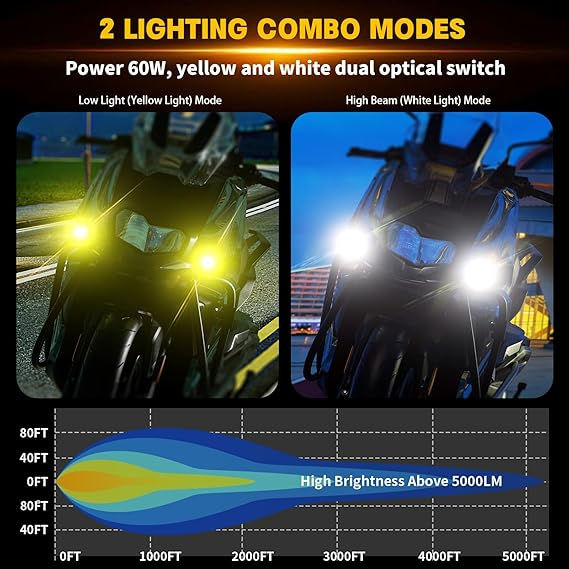
Overdriving your lights means riding faster than the distance your headlights illuminate. For example, if your headlights clearly light up the road 150 feet ahead, but you are traveling at a speed that covers 200 feet in the time it takes to react, you are overdriving your lights. This reduces your ability to see hazards in time to avoid them.
Why Overdriving Lights Is Dangerous
Reduced reaction time: You have less time to spot and respond to obstacles, animals, or road damage.
Increased risk of accidents: Hitting unseen hazards can cause crashes or loss of control.
False sense of security: Bright lights can make riders feel they see more than they actually do.
How to Avoid Overdriving Your Lights
Know Your Headlight Range
Test your headlights during the day or early evening. Measure how far ahead the low and high beams illuminate clearly. This distance is your safe stopping and reaction zone at night.
Adjust Your Speed
Match your speed to the distance your lights cover. For example, if your headlights illuminate 200 feet ahead, your speed should allow you to stop safely within that distance. Use the formula:
Speed (mph) × 1.47 = feet per second
Calculate how far you travel in the time it takes to react and brake
Use Proper Lighting Settings
Use low beams in traffic or when following other vehicles.
Switch to high beams on open roads without oncoming traffic.
Avoid blinding other drivers by switching back to low beams promptly.
Maintain Your Lights
Clean and align your headlights regularly. Dirty or misaligned lights reduce effective range and increase the risk of overdriving.
Practical Examples
Rural night riding: Roads may have animals or debris. Riding at 50 mph with headlights illuminating 150 feet means you cover 73 feet per second, leaving only about 2 seconds to react. Slowing down to 40 mph increases reaction time and safety.
City riding: Streetlights and traffic reduce the need for high beams. Using low beams and moderate speed prevents blinding others and helps you see pedestrians or cyclists.
Additional Tips for Night Riding Safety
Wear reflective gear to increase your visibility.
Use auxiliary lights to widen your field of vision but avoid excessive brightness.
Stay alert and scan the road continuously for hazards.
Avoid riding at night if you feel tired or impaired.
Understanding and respecting the limits of your motorcycle’s lighting can prevent accidents and save lives. By not overdriving your lights, you give yourself the time and space needed to react to unexpected dangers on the road.
At the end of the day, it’s more than just the ride—it’s the stories, the freedom, and the people who make this journey worth every mile. If this article fired something up in you, then you’re already one of us. Stick around, like, subscribe, and be part of a community that lives for the throttle, the road, and everything in between. There’s plenty more ahead—and trust me, you won’t want to miss what’s coming next. Don't forget to leave a comment.

Comments